Anza-Borrego from San Diego: The Two-Hour Desert Drive, the Sculptures in the Sand, and the Season That Matters
California’s largest state park is a desert of badlands, palm oases, and full-size metal dragons scattered across the sand — two hours from San Diego, and October to April is when it makes sense.
The short version
- The drive runs about two hours via Julian’s mountain pie stop or the Montezuma grade’s big descent — both good, the loop using each direction better; park information at parks.ca.gov.
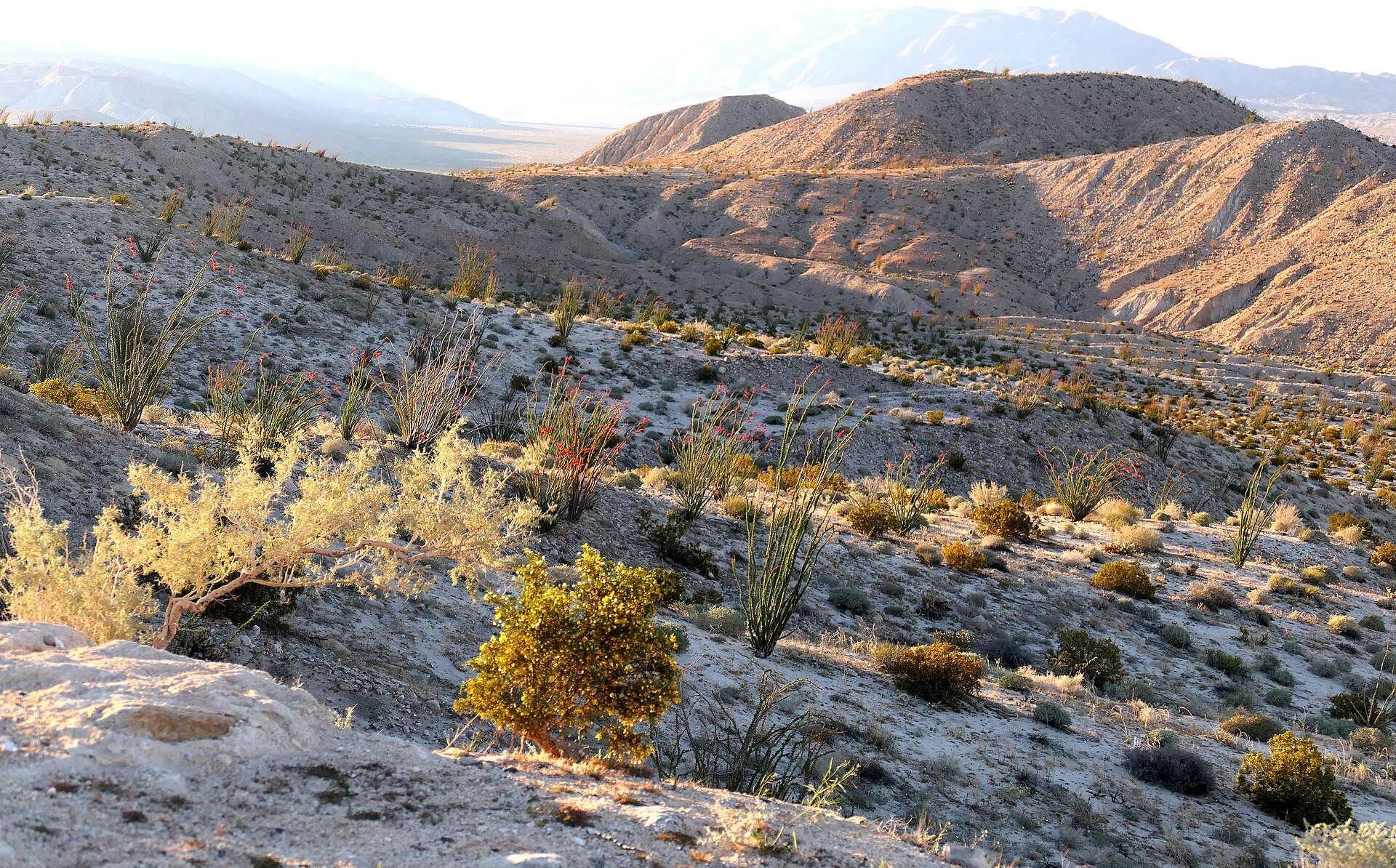
- Anza-Borrego is the state’s largest park by a wide margin — 600,000 acres of badlands, washes, and mountain walls around the small grid of Borrego Springs, itself a certified dark-sky town.
- The Galleta Meadows sculptures — 130-plus full-size rusted-metal creations, from mammoths and eagles to a 350-foot serpent crossing the road — stand free on open desert around town, drivable as a scattered safari.
- The Slot is the accessible slot canyon: a half-hour of narrowing sandstone corridors off a dirt approach road most sedans manage dry.
- Borrego Palm Canyon’s three-mile round trip walks from the campground into a genuine palm oasis — the park’s signature hike, best in the cool hours.
- Font’s Point — the badlands overlook the postcards use — sits up four miles of soft sand wash: high-clearance territory, honestly stated, and worth confirming conditions at the visitor center before attempting.

Getting there
Two roads in make the natural loop: out through Julian’s mountain town (the pie stop is regional law) and down the Banner grade, back up the Montezuma grade’s long desert-floor reveal — or reversed for sunset from the top. There’s no transit and no rideshare rescue; the car, its tank, and its water supply are the expedition. Cell service thins past Julian and vanishes in the washes — download the map, tell someone the plan, and treat the visitor center at Borrego Springs as the day’s first stop for conditions.
The day
Structure by temperature: Borrego Palm Canyon’s oasis hike first in the morning cool — bighorn sheep audit the slopes if you’re lucky — then the sculpture safari by car as the heat builds, mammoths and dragons posed against the badlands with nothing but creosote between you and them. Lunch in Borrego Springs’ modest grid, then The Slot’s shaded corridors for the afternoon’s walk. Font’s Point, for the equipped, saves itself for late light when the badlands go corduroy-gold — the overlook at sunset is the park’s grand finale, followed by the Montezuma grade’s descent into evening or, for the committed, staying past dark in the dark-sky town for the stars the certification promises.
When to go
October through April, per the alarm, with December–February the reliable sweet spot and March the gamble that occasionally pays the jackpot: after wet winters, the desert floor runs purple and gold in superblooms that make national news and weekend traffic jams — the park’s wildflower updates are the referee. Summer posts temperatures that close the argument; even shoulder months want dawn starts. Winter nights drop cold fast — the sunset-and-stars plan packs layers it will use.
Frequently Asked Questions
Is it worth it if there’s no bloom?
Yes — the sculptures, the slot, the oasis, and the badlands are the permanent collection; flowers are the occasional exhibition. Plan for the former and treat any bloom as bonus.
Can a normal car do this trip?
Everything essential — sculptures, Slot approach in dry conditions, palm canyon, viewpoints — sits on pavement or firm dirt. Font’s Point and the far washes want clearance; the visitor center’s condition report settles it day by day.
What’s the story with the sculptures?
A local landowner commissioned artist Ricardo Breceda to populate his parcels — prehistoric creatures that actually lived here, plus the famous serpent — and left them open to all. It’s the rare art installation improved by a desert.
How real is the heat risk?
Real enough that the park’s own advice reads like the alarm: summer visits are for dawn and experts, and even spring afternoons punish the waterless. A gallon per person in the car is the desert’s ante.
Anza-Borrego or Joshua Tree from San Diego?
Anza-Borrego is closer, freer, and emptier; Joshua Tree has the namesake forests and the climbing culture at national-park polish. From San Diego, this is the honest desert day; from LA, the other one is.