San Diego Day Tours
I’m Serious Day Tour Man AI, your day trip expert. Ask me anything — where to go, how to get there, and what’s actually worth your day.
San Diego’s day trips run from another country to another planet: an international border you can walk across for tacos sits twenty minutes south, and California’s largest state park — 600,000 acres of badlands, palm oases, and 130 full-sized metal dinosaurs standing in the open desert — sits two hours east.
Between them: a gold-rush mountain town that reinvented itself around apple pie, a wine valley that launches hot-air balloons at dawn, and a safari park where the trams cross something very close to African savanna. The city block sorts the zoo question, the beaches, and the fish taco.
Here’s what’s worth a day, with real times and honest trade-offs.

Popular Day Trips
Anza-Borrego
The Two-Hour Desert Drive, the Sculptures in the Sand
Julian
A Gold Town at Four Thousand Feet, the Pie Rivalry
Anza-Borrego — The Desert and the Dragons
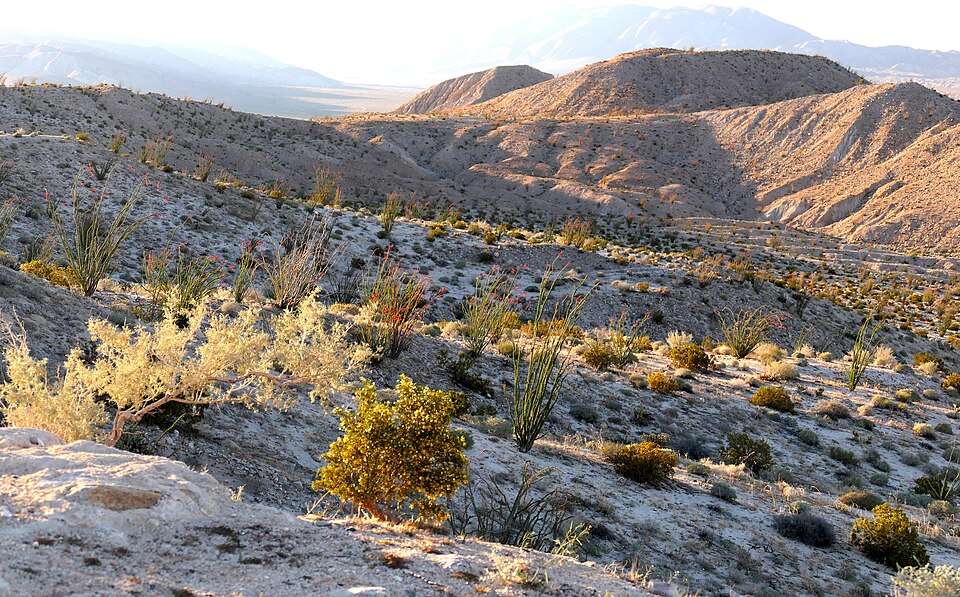
Two hours east, Anza-Borrego Desert State Park is California’s largest — 600,000 acres wrapping the town of Borrego Springs — and the day starts at the underground visitor center for road, trail, and weather conditions, because out here the conditions are the itinerary.
The circuit: Borrego Palm Canyon’s three-mile round trip up a sandy wash to a genuine fan-palm oasis (the only palm native to California, with bighorn sheep on the slopes for the lucky); The Slot, the forty-foot-deep sandstone corridor in the badlands that narrows to shoulder width ($10 day-use fee collected there); Fonts Point at sunset, where the badlands do their painted-desert act; and — free, public, and gloriously strange — the Galleta Meadows sculptures: artist Ricardo Breceda’s 130-plus full-sized metal creations scattered across the desert floor, from mammoths and saber-tooths to a 350-foot serpent diving through the road itself.
Three rules apply: October through March is the season (summer runs past 110 and means it); the wildflower bloom — late February into April, intensity varying wildly by winter rains — has its own hotline and can briefly make this the most visited desert in America; and the park is an International Dark Sky Park, so staying past nightfall is the free second show. Fuel up before arriving; Borrego Springs has one gas station.
Read the full Anza-Borrego day-trip page.
Julian — The Pie Town in the Mountains
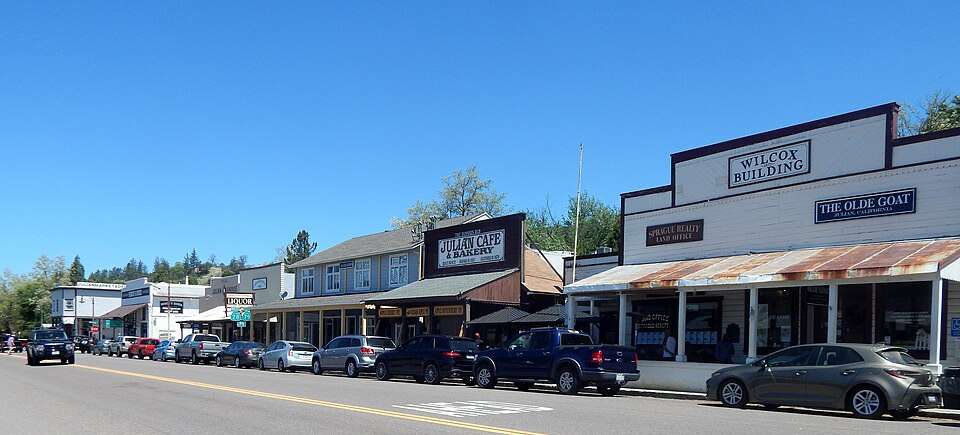
An hour east into the Cuyamaca Mountains, Julian is the 1870s gold-rush town that struck a more durable vein: apples. The four-block historic main street runs wooden storefronts, and the pie economy is the genuine article — Julian Pie Company and Mom’s are the rival institutions, the apple-cider-and-crumb-top debate is taken locally seriously, and buying a whole pie for the drive home is standard practice, not tourism.
The gold layer survives underneath: the Eagle and High Peak Mine runs underground tours through the actual 1870s workings — hard hats, hand-drilled tunnels, and a genuinely good hour — and the Pioneer Museum and cemetery on the hill cover the rest. Fall is the town at full tilt: apple harvest (September–October) brings the cider presses and the weekend crowds; the smart version goes midweek.
The stack around it: Cuyamaca Rancho State Park’s oak-and-meadow trails (Stonewall Peak’s switchbacks buy the two-hour summit view), Lake Cuyamaca’s trout-and-ducks hour, and — the winter surprise — Julian at 4,200 feet gets real snowfall a few times a year, at which point half of San Diego drives up before lunch. Julian is a half day of charm plus pie; the mountain parks make it full.
Read the full Julian day-trip page.
Tijuana — The Walk-Across Border Day
Twenty minutes south, the San Ysidro crossing is the busiest land border in the Western Hemisphere, and the day-trip version is well-established: take the trolley to San Ysidro, walk across (passport mandatory — REAL ID does not work for re-entry; a passport book or card does), and Tijuana’s revitalized center is a short taxi or a walkable stretch beyond.
What the day is for: the food. Tijuana’s street-and-chef scene has real standing — birria de res in the Zona Centro, the Telefónica Gastro Park’s food-truck collective, Caesar’s on Avenida Revolución (the salad was invented in this hotel’s restaurant, and they still make it tableside), and craft beer in the Plaza Fiesta cluster. The Avenida Revolución arch, the cathedral, and the CECUT cultural center’s sphere fill the non-eating hours.
The mechanics, plainly: southbound takes minutes; northbound is the variable — the pedestrian return line runs from twenty minutes to two-plus hours by day and season, so build slack and check wait-time apps before committing to a dinner reservation on the wrong side. Standard street sense applies as in any big city; stay central, use registered taxis or rideshare, and check current travel guidance when planning. Leave the rental car in San Diego — the walk-across version deletes the insurance and line problems entirely.
Temecula — Balloons and the Wine Valley
An hour north, Temecula Valley is Southern California’s wine country, and its signature happens before breakfast: the dawn hot-air balloon flights that float over the vineyards most calm mornings — book ahead, expect a pre-sunrise meeting time, and know the champagne landing tradition is honored. It’s the region’s best special-occasion ticket.
The grounded version: forty-plus wineries along Rancho California Road, with the honest sorting that this is a cheerful, approachable wine region — tasting rooms run generous and unpretentious, the Rhône and Italian varietals handle the heat best, and weekends bring bachelorette-party energy that midweek visits entirely avoid. Old Town Temecula adds the boardwalk-storefront hour: antique barns, the Wednesday-through-Sunday farmers’ market rhythm, and enough tasting rooms to skip the driving question — which brings the rule: this day needs a designated driver, a hired car, or one of the shuttle loops, chosen before the first pour, not after.
The stack: Pechanga’s resort scale for those inclined, and the Santa Rosa Plateau’s vernal-pool trails in spring for the nature hour. Temecula is the celebration day — balloons, patios, live-music tasting rooms — not a Napa pilgrimage, and it’s better for knowing which one it is.
The Safari Park & North County — The Savanna Day
Forty minutes north in Escondido, the San Diego Zoo Safari Park is the answer to “which zoo?” for anyone who wants scale: 1,800 acres where the Africa Tram crosses open savanna with rhinos, giraffes, and antelope herds mixing at distance, and the premium safari-truck upgrades put you inside the field enclosures for the close version. The sort against the famous downtown Zoo: the Zoo for density, canopy, and walkability; the Safari Park for openness and the tram spectacle — both are run by the same nonprofit, both are full days, and doing both means two days, not one split.
North County stacks around it. Seasonal headliner: the Flower Fields at Carlsbad — fifty acres of ranunculus stripes blooming roughly March through early May, timed tickets in season. Legoland handles the under-10 crowd better than any park in the county; Oceanside’s pier and surf-museum strip covers the beach-town hour; and Encinitas’ Swami’s and the Self-Realization gardens (free, cliff-top, quietly lovely) anchor the coastal drive home on the 101.
The frame: Safari Park alone is a full day with the sunscreen to prove it — arrive at opening for the animals’ active hours, and summer visits want the early tram before the heat parks everyone in the shade.
Balboa, the Beaches & San Diego Itself
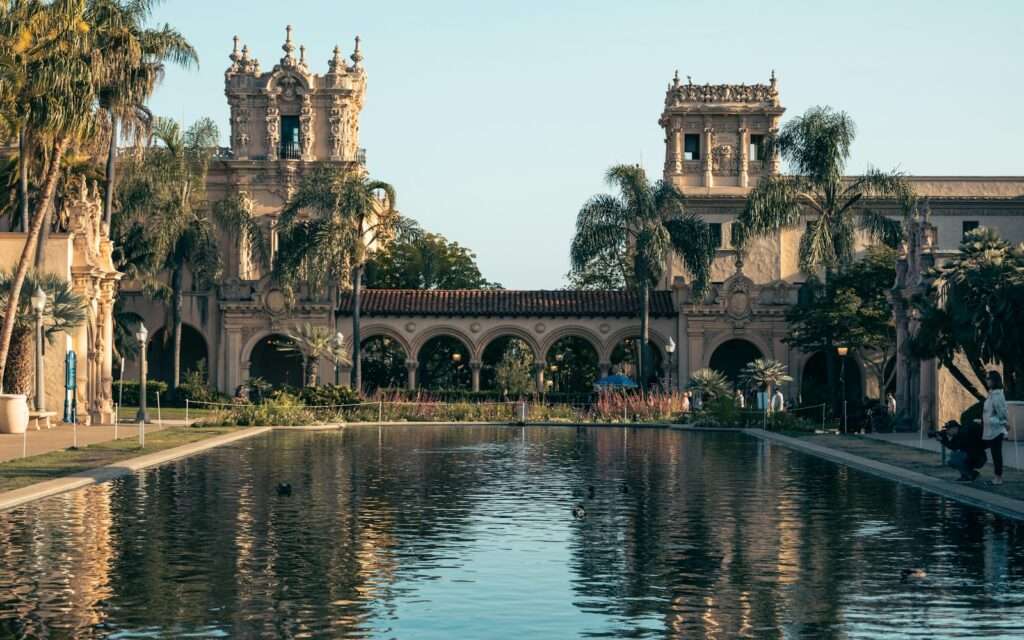
The city sorts by park, sand, and taco. Balboa Park is the cultural anchor: seventeen museums in the 1915 exposition’s Spanish-colonial fantasy buildings, the free-to-walk gardens and El Prado colonnades, the Timken’s small free collection, and the world-famous Zoo on its northern edge — the park is a two-day proposition honestly compressed to one by choosing museums in advance. The USS Midway on the harbor is the county’s best single military-history ticket; Cabrillo National Monument at Point Loma adds the tidepools (check the tide chart) and the whole-bay panorama.
The beach sort: Coronado for the postcard (the Hotel Del’s turrets, the wide flat sand, the ferry over as the better arrival), La Jolla Cove for the sea lions and snorkeling (the sea-lion viewing runs by respect rules — distance, no touching, no selfie encroachment; the animals bite and the fines are real), Pacific and Mission Beach for the boardwalk energy, Torrey Pines for the bluff-trail-to-sand combination, and Sunset Cliffs for exactly what the name promises. Del Mar and Encinitas serve the north-county overflow.
The eating truth: the fish taco is the civic dish — Oscar’s, the piers, and every neighborhood’s rival — with California burritos (the fries go inside; this is not negotiable locally) and Convoy Street’s pan-Asian corridor as the other pillars. Season math: September and October are the secret best (warm water, no gloom, thin crowds); May–June brings the marine-layer gloom that burns off inland; and the sweet spot of the whole year is any random Tuesday, seventy-two degrees, which is most of them.
Frequently Asked Questions
What are the metal sculptures in the desert?
Galleta Meadows at Borrego Springs — 130-plus full-sized metal creatures by Ricardo Breceda, from mammoths to a 350-foot serpent crossing the road, free and open on the desert floor. Pair them with The Slot canyon and a dark-sky night.
Do you need a passport for Tijuana?
Yes — a passport book or card for the return; REAL ID doesn’t work at the border. Walk across at San Ysidro via the trolley, eat spectacularly, and build slack for the northbound line, which runs twenty minutes to two-plus hours.
Zoo or Safari Park?
The downtown Zoo for density and canopy walkability; the Escondido Safari Park for open savanna and the Africa Tram. Same nonprofit, both full days — pick by taste, and don’t try to split one day across both.
When do the Carlsbad Flower Fields bloom?
Roughly March through early May — fifty acres of ranunculus stripes, timed tickets in season. Pair them with Legoland for kids or the 101 coastal towns for everyone else.
When is wildflower season in Anza-Borrego?
Late February into April, varying hugely with winter rain — the park runs a bloom hotline, and big years briefly flood Borrego Springs. October through March is the general desert window; summer is genuinely dangerous heat.